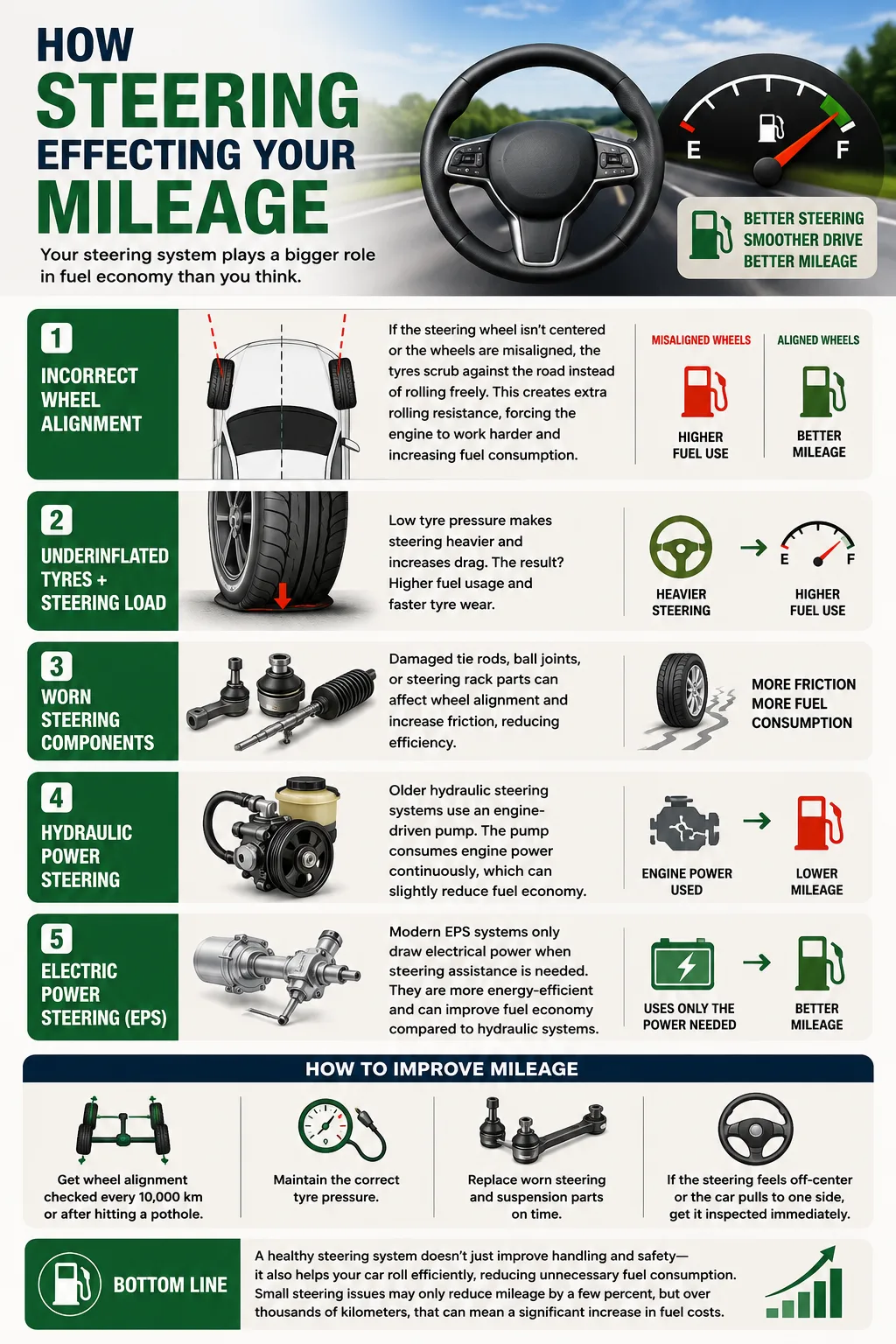
1. Incorrect Wheel Alignment If the steering wheel isn’t centered or the wheels are misaligned, the tyres scrub against the road instead of rolling freely. This creates extra rolling resistance, forcing the engine to work harder and increasing fuel consumption.
2. Underinflated Tyres + Steering Load Low tyre pressure makes steering heavier and increases drag. The result? Higher fuel usage and faster tyre wear.
3. Worn Steering Components Damaged tie rods, ball joints, or steering rack parts can affect wheel alignment and increase friction, reducing efficiency.
4. Hydraulic Power Steering Older hydraulic steering systems use an engine-driven pump. The pump consumes engine power continuously, which can slightly reduce fuel economy.
5. Electric Power Steering (EPS) Modern EPS systems only draw electrical power when steering assistance is needed. They are more energy-efficient and can improve fuel economy compared to hydraulic systems.
How to Improve Mileage✔ Get wheel alignment checked every 10,000 km or after hitting a pothole.✔ Maintain the correct tyre pressure.✔ Replace worn steering and suspension parts on time.✔ If the steering feels off-center or the car pulls to one side, get it inspected immediately.
A healthy steering system doesn’t just improve handling and safety—it also helps your car roll efficiently, reducing unnecessary fuel consumption. Small steering issues may only reduce mileage by a few percent, but over thousands of kilometers, that can mean a significant increase in fuel costs.