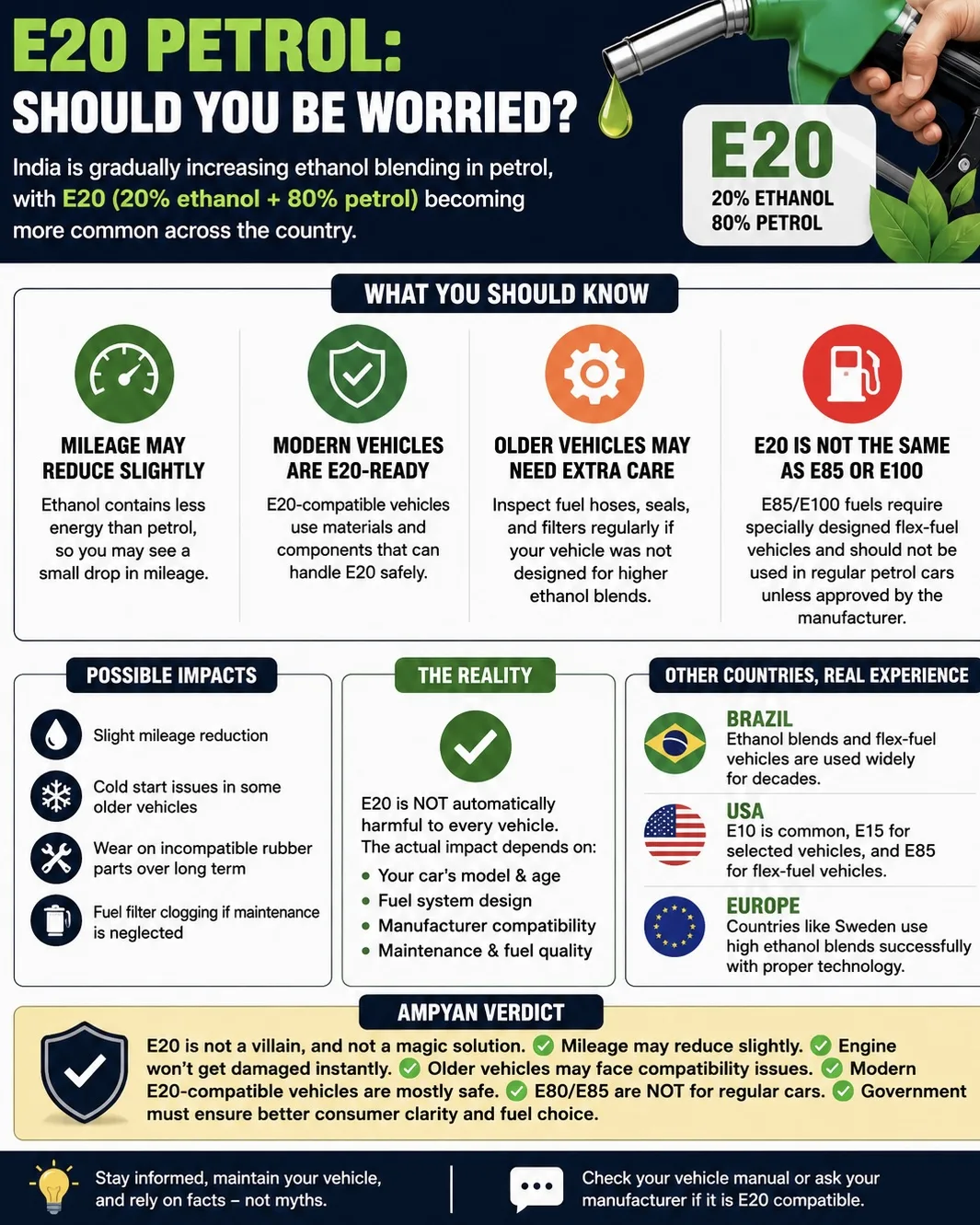
India is gradually increasing ethanol blending in petrol, with E20 (20% ethanol + 80% petrol) becoming more common across the country.
Many car owners are concerned about lower mileage, fuel pump damage, rubber seal wear, and engine life.
Here’s what you should know:
* Mileage may reduce slightly because ethanol contains less energy than petrol.
* Modern E20-compatible vehicles are designed with fuel system materials that can handle E20 safely.
* Older vehicles may require extra inspection, especially fuel hoses, seals, and filters, if they were not designed for higher ethanol blends.
* E20 is not the same as E85 or E100. Those fuels require specially designed flex-fuel vehicles and should not be used in regular petrol cars unless approved by the manufacturer.
AMPYAN Verdict
E20 is not automatically harmful to every vehicle. The actual impact depends on your car’s model, fuel system design, and manufacturer compatibility. Before worrying, always check whether your vehicle is officially approved for E20 fuel.
Stay informed, maintain your vehicle regularly, and rely on facts—not myths.