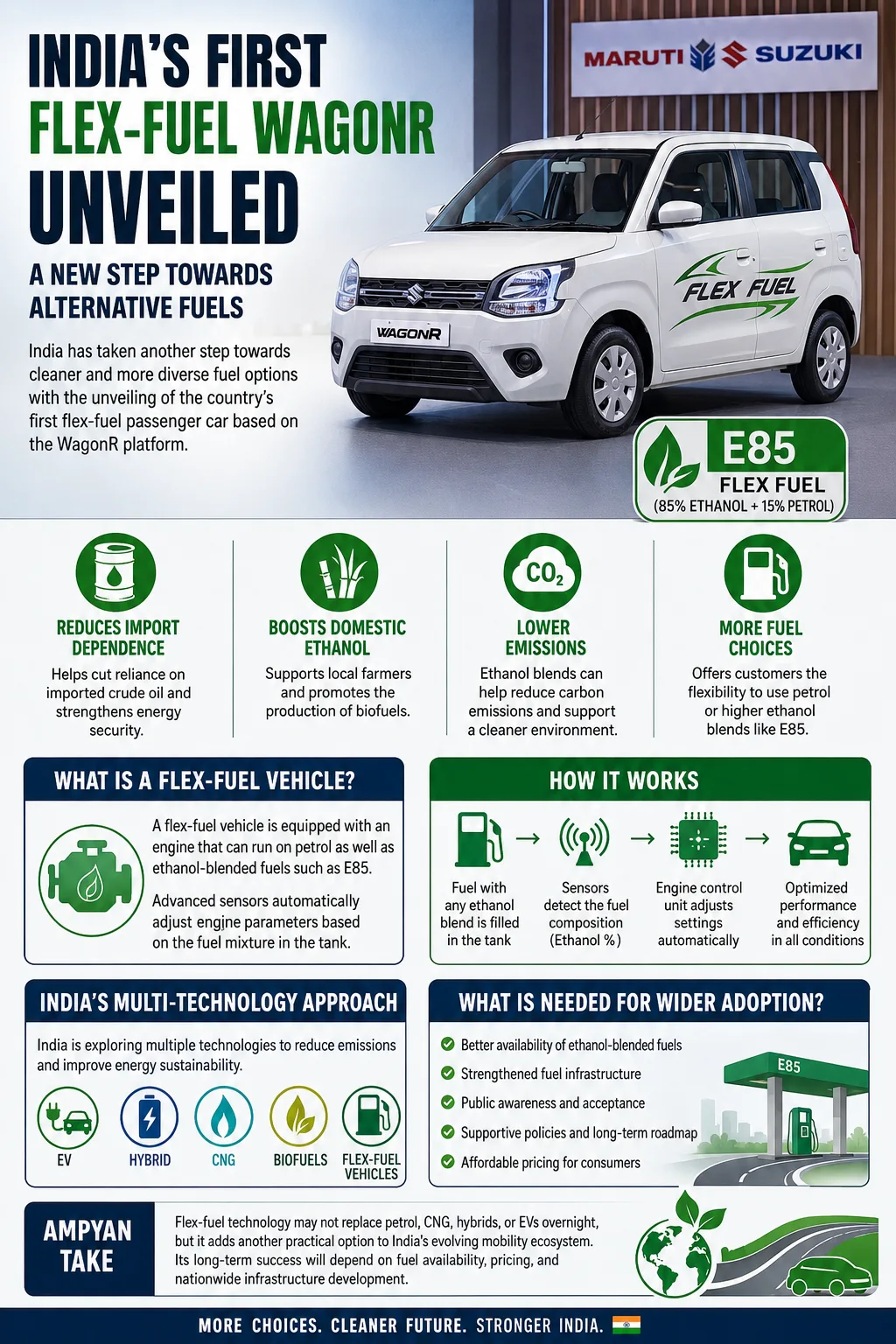
India has taken another step towards cleaner and more diverse fuel options with the unveiling of the country’s first flex-fuel passenger car based on the WagonR platform. The vehicle has been developed to run on E85 fuel, a blend containing up to 85% ethanol and 15% petrol.
The launch highlights the growing focus on reducing dependence on imported crude oil while encouraging the use of locally produced biofuels. Flex-fuel vehicles are designed to operate on petrol as well as higher ethanol blends, offering greater fuel flexibility to customers.
To support ethanol-based operation, the vehicle uses specially adapted engine and fuel-system components that can handle the different properties of ethanol. Manufacturers believe such technology could help lower carbon emissions while supporting India’s long-term energy security goals.
Industry leaders and policymakers also emphasized that wider adoption of flex-fuel vehicles will require stronger fuel availability, public awareness, and supporting infrastructure across the country.
India’s automobile sector is currently exploring multiple technologies, including EVs, hybrids, CNG, biofuels, and flex-fuel vehicles, as part of a broader strategy to reduce emissions and improve energy sustainability.
What is a Flex-Fuel Vehicle?
A flex-fuel vehicle is equipped with an engine capable of running on petrol as well as ethanol-blended fuels such as E85. Advanced sensors automatically adjust engine parameters based on the fuel mixture present in the tank.
Why It Matters
* Reduces dependence on imported crude oil.
* Encourages domestic ethanol production.
* Supports cleaner fuel alternatives.
* Provides customers with more fuel choices.
AMPYAN Take:
Flex-fuel technology may not replace petrol, CNG, hybrids, or EVs overnight, but it adds another practical option to India’s evolving mobility ecosystem. Its long-term success will depend on fuel availability, pricing, and nationwide infrastructure development.