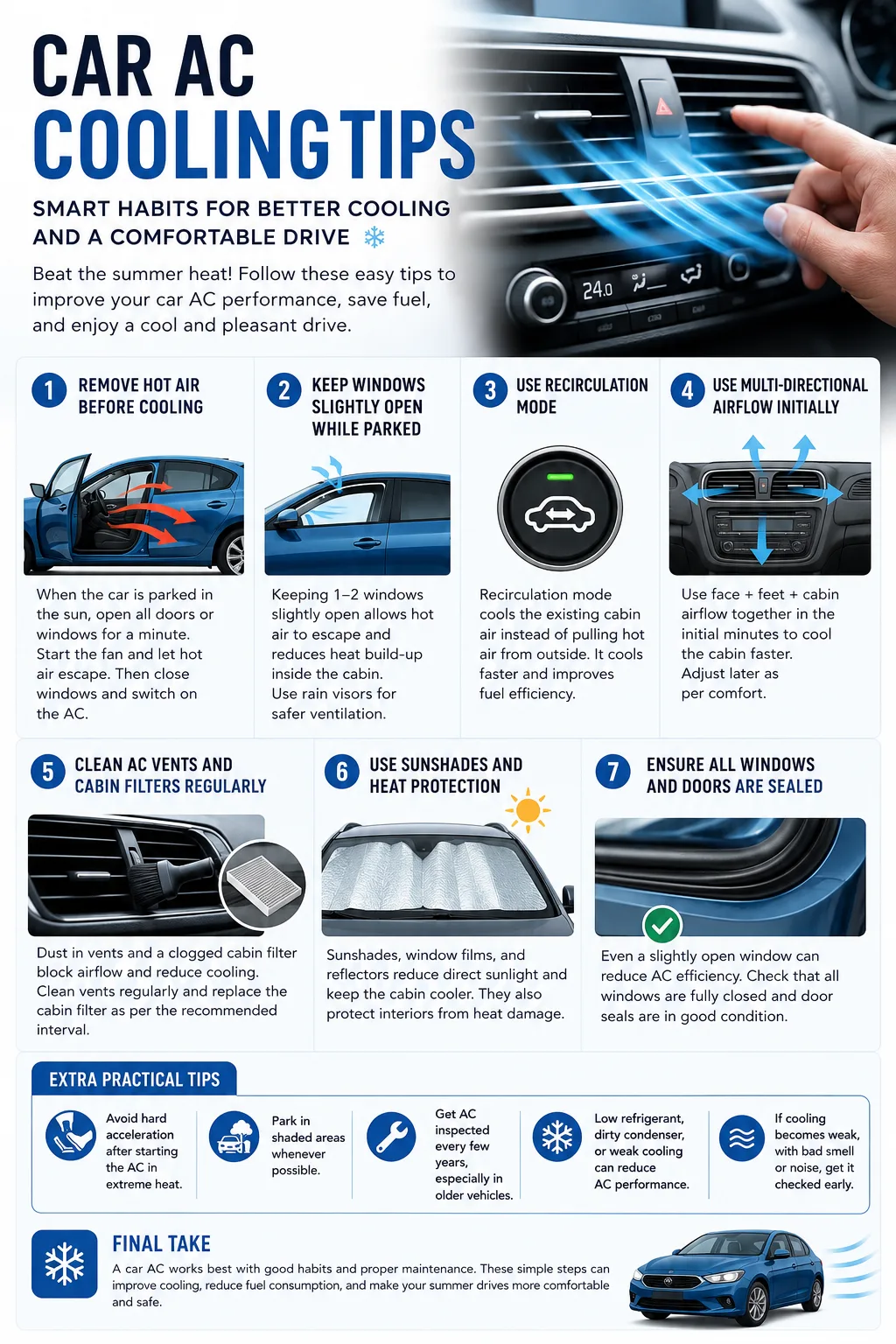
As temperatures continue to rise across many Indian cities, stepping into a parked car can feel like entering an oven. In such weather, a properly working car AC is not just a comfort feature anymore — it has become a necessity for safe and stress-free driving.
Many people think weak cooling always means an expensive AC repair, but in reality, simple driving and maintenance habits can make a huge difference. Small mistakes like poor ventilation, dusty vents, or incorrect AC settings often reduce cooling performance and increase fuel consumption.
Here are some practical and easy-to-follow tips that can help improve your car’s AC performance and keep the cabin cooler during extreme summer conditions.
⸻
1. Remove Hot Air Before Switching the AC to Full Cooling
When a car stays parked under direct sunlight, the cabin temperature rises very quickly. Instead of immediately blasting the AC at maximum, first open all doors or windows for a minute.
Start the blower fan and let the trapped hot air escape. Once the cabin temperature starts dropping slightly, close the windows and then switch on the AC properly. This helps the cooling system work more efficiently and reduces stress on the compressor.
⸻
2. Keep the Windows Slightly Open While Parked
If the vehicle is parked for long hours in sunlight, keeping one or two windows slightly open can help reduce heat buildup inside the cabin.
Even a small ventilation gap allows trapped hot air to escape naturally. Cars fitted with rain visors can do this more safely without making it obvious that the windows are slightly open.
This simple habit can reduce dashboard, steering wheel, and seat temperatures significantly.
⸻
3. Use Recirculation Mode Instead of Fresh Air Mode
One of the most common mistakes drivers make is keeping the AC on fresh air mode during peak summer heat.
Fresh air mode continuously pulls hot air from outside, forcing the AC system to work harder. In extremely hot conditions, it is better to use recirculation mode, where the system cools already chilled cabin air repeatedly.
This improves cooling speed and also helps reduce fuel consumption.
⸻
4. Use Multi-Directional Airflow Initially
Most modern cars offer airflow settings that distribute air toward the face, feet, and cabin together.
During the first few minutes, using multi-directional airflow helps cool the entire cabin faster instead of concentrating cold air in only one area. Once the cabin becomes comfortable, airflow can then be adjusted according to preference.
⸻
5. Clean AC Vents and Cabin Filters Regularly
Dust accumulation inside AC vents, blower ducts, and cabin air filters can block airflow and reduce cooling efficiency.
A clogged cabin filter often causes weak airflow even when the AC system itself is working properly. Regular cleaning or timely replacement of the cabin filter improves airflow quality and cooling performance.
Using a vacuum cleaner for dashboard vents and maintaining a clean cabin can also help prevent dust circulation.
⸻
6. Use Sunshades and Heat Protection Accessories
Sunshades, windshield reflectors, and quality window films can noticeably reduce cabin temperatures during summer.
These accessories reduce direct sunlight entering the cabin and help protect interior materials like dashboards, leather seats, and infotainment screens from excessive heat damage.
Lighter-colored seat covers and steering covers can also reduce heat absorption.
⸻
7. Ensure All Windows and Doors Are Properly Sealed
Even a slightly open window can reduce AC efficiency dramatically. Many drivers unknowingly leave rear windows partially open or door seals loose.
Before starting a long drive, check that all windows are fully closed and door rubbers are sealing properly. This helps maintain cabin pressure and keeps cool air inside the vehicle.
⸻
Extra Practical Tips From an Automotive Perspective
* Avoid immediately accelerating hard after starting the AC in extreme heat.
* Park in shaded areas whenever possible.
* Get the AC system inspected every few years, especially in older vehicles.
* Low refrigerant gas, weak condenser cooling, or dirty condensers can also reduce performance.
* If cooling suddenly becomes weak along with unusual noise or bad smell, get the system checked early before damage becomes expensive.
⸻
Final Take
A car’s AC system performs best when good driving habits and proper maintenance work together. In many cases, drivers can improve cooling performance without expensive repairs simply by using the system correctly.
During intense Indian summers, these small habits can make daily travel more comfortable, reduce cabin fatigue, and even help improve overall driving experience.